Red shore
Why the sand and cliffs are red
Iron oxide in PEI's sandstone rusts wherever it meets air and water, staining the whole coastline — cliffs, sand and even the roads — a deep, distinctive red.
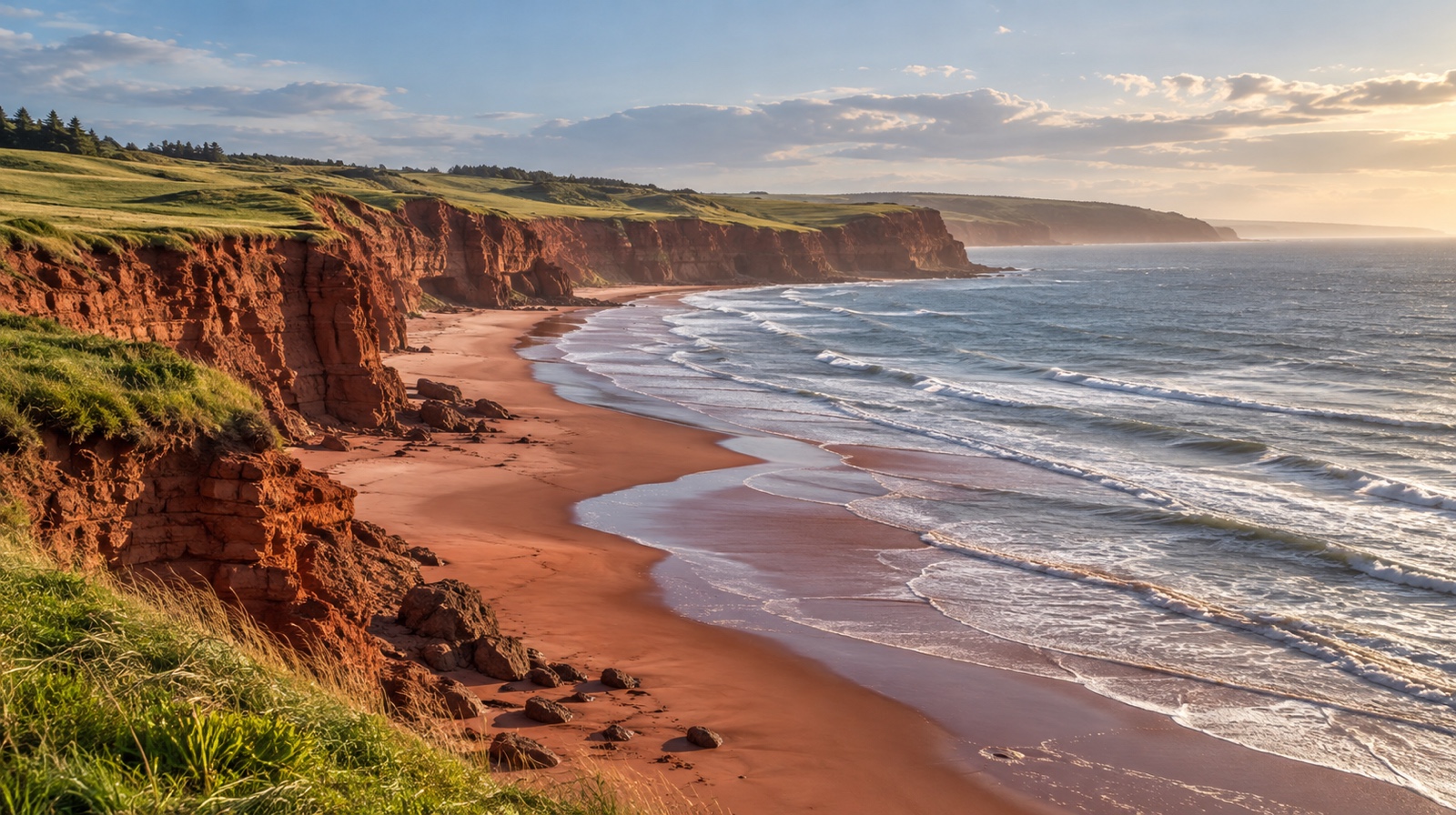
- Cause
- Iron oxide (rust) in sandstone and soil
- Where
- Most of PEI's coastline, most vividly north shore
- Caution
- Cliffs erode fast — stay well back from edges
The geology
Rust, at a landscape scale
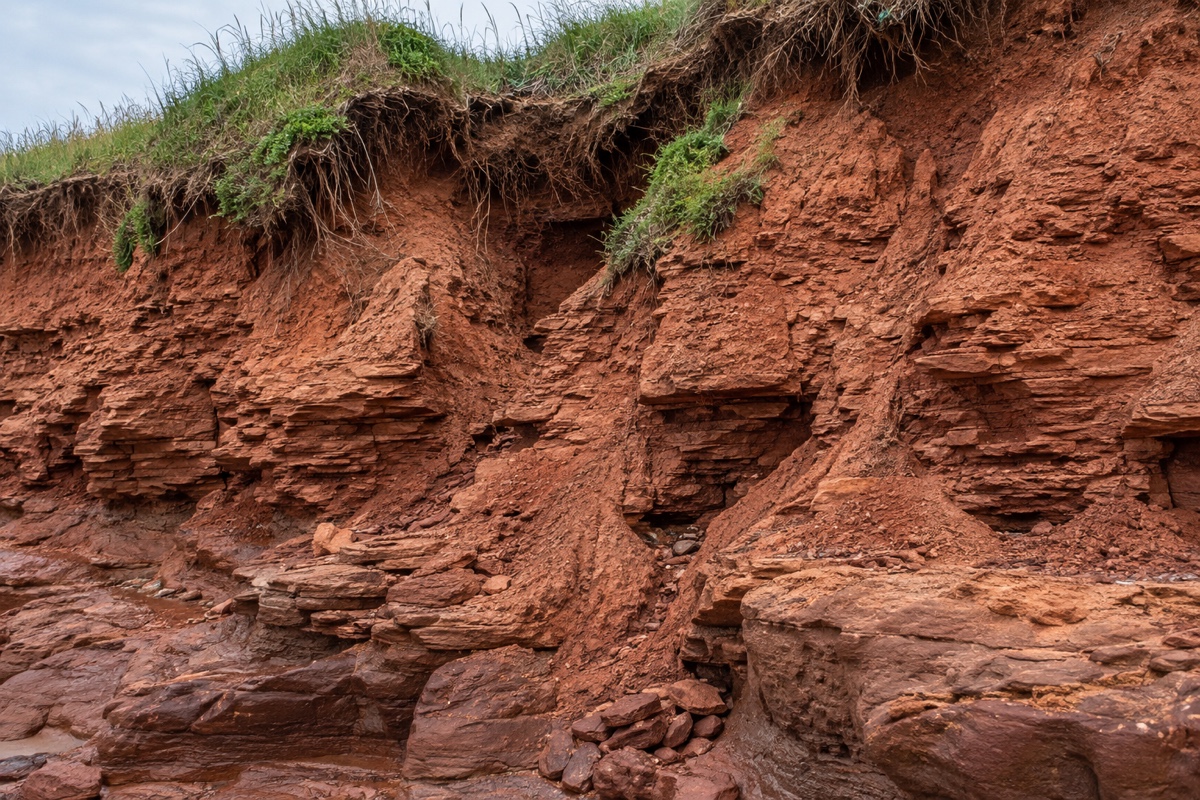
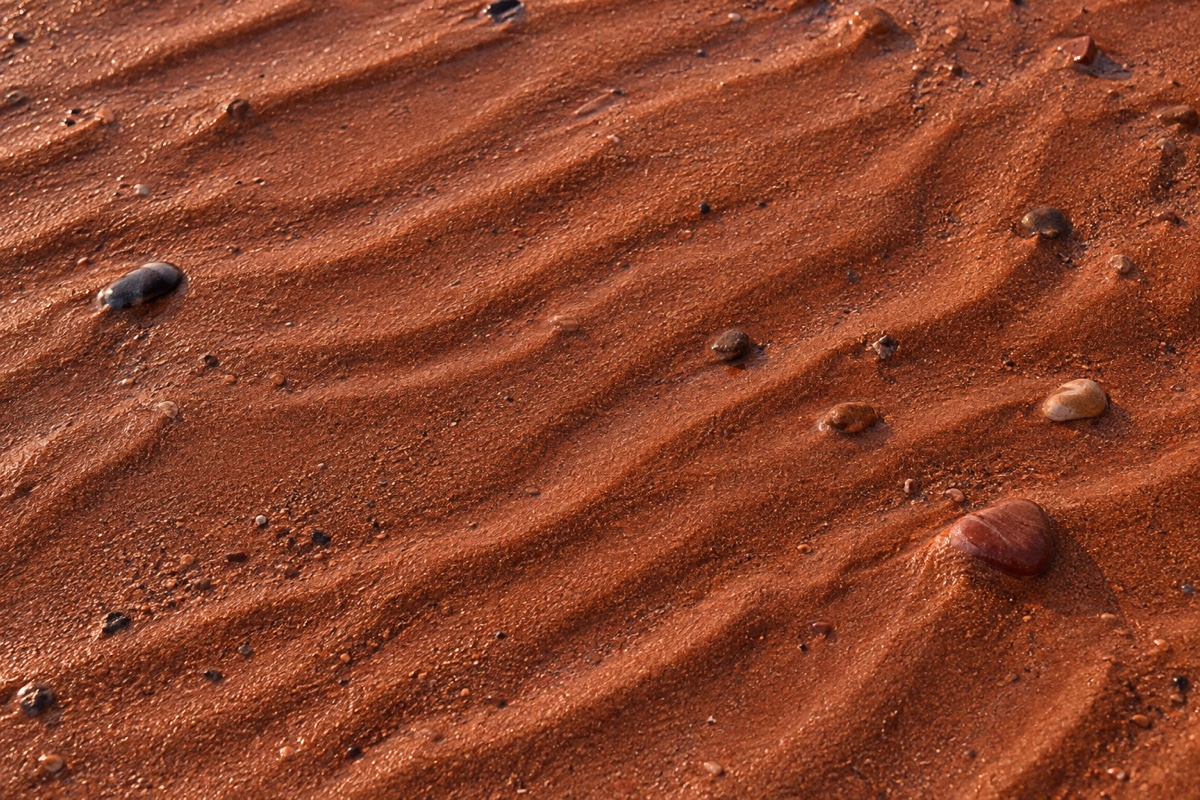
PEI's soil and sandstone formed from eroded red sandstone and conglomerate rock rich in iron and other minerals. Once exposed to air and moisture, that iron oxidizes — rusts — turning soil, cliff and sand the same deep red seen island-wide, from farm fields to the shoreline itself.
Safety
Beautiful, and actively falling
The same soft, iron-rich sandstone that gives PEI its color also erodes quickly and unpredictably under wave action, rain and frost. Cliff collapses happen with little warning. Stay on marked trails, keep well back from both the top and base of any cliff, and never dig into or climb an exposed cliff face.
Where to see it
Cavendish and the north shore
The most vivid red cliffs run along PEI's north-central shore near Cavendish and Prince Edward Island National Park, where wind and Gulf of St. Lawrence surf keep the rock freshly exposed. National park beaches here provide supervised, managed access to the same geology safely.